"I realized I'd never be able to play my style of music in Nashville. . . . They didn't allow any electric instruments. They didn't allow drums. They didn't allow horns. And where was I gonna work up there? Down in Texas I knew all these bars and honky-tonks where I could get work, because by then I was playing dance music." - Hank Thompson
We couldn't find Hank's Rockin' in the Congo as a video, so we pulled up this somewhat "Around the World"-related tune, Whoa, Sailor, instead.
The King of Honky-Tonk Swing, Hank Thompson had a sixty-year career singing about booze, babes, and generally raisin' hell. Over a twenty-year period, from 1948 to 1978, Thompson had 28 Top-10 hits. His backup band, the Brazos Valley Boys, was Billboard magazine's top-ranked Western swing band from 1953 to 1965.
As a high school student in the early 1940s, Thompson hosted a Waco radio show, billing himself as "Hank the Hired Hand." After his discharge from the Navy following WW II, Thompson returned to radio and had a regional hit in Texas with his recording of Whoa Sailor.
In 19 and 52, incidentally the year Your Host was born, Hank would have his first national #1 single, The Wild Side of Life, a song which contained the memorable line, "I didn't know God made honky-tonk angels." That sentiment would end up launching Kitty Wells career, who protested in a reply song, It Wasn't God Who Made Honky Tonk Angels, that cheatin' husbands were leading girls astray rather than the Good Lord.
Thompson hosted a television variety show in Oklahoma City from 1954 to 1957, which was the first music variety show to be broadcast in color. He was also the first country-western performer to record a live album in Vegas, Live at the Golden Nugget. He was, however, no fan of the Grand Ole Opry, as his quote that opens this article notes.
With a man whose repertoire included A Six-Pack to Go and Bubbles in My Beer it's no wonder that one of Hank Thompson's TV sponsors was Falstaff Beer, once one of the biggest-selling labels in the U.S., but gone where the wild goose goes in 2005. In our continuing "Commercial Affiliation" sub-theme, here's a video of Hank endorsing Falstaff.
I'm doing another "someone who hasn't been featured on Theme Time yet," but like my prediction about Rick Nelson, I bet she will.
Maria Muldaur. Born Maria D'Amato, and raised in Greenwich Village, Maria was at ground zero for the Great Folk Scare of the '60s. Her first influences were country music singers, Hank Williams. Kitty Wells. Hank Snow. Ernest Tubb. When she was five years old, Maria liked to sing Kitty Wells' "It Wasn't God Who Made Honky Tonk Angels," complete with yodels.
After she finished high school, Muldaur moved to a loft in the Village and got involved with The Friends of Old Timey Music, a group that traveled the rural South to find legends like Doc Watson and Mississippi John Hurt, and then bring them north to present them in concert to urban audiences. "We used to have after hours jams on Saturday nights [in my loft], Maria said in an interview. Blues legends like the Reverend Gary Davis would come over and drink whisky, tell stories and play and sing. We'd stay up all night, then drive him up to Harlem, and without getting any sleep, he'd deliver a sermon. I found myself sitting at the feet of the Rev. Davis, Mississippi John Hurt, Son House and blues diva Victoria Spivey. It was an incredible time."
After returning to New York from one of her visits to the South, Maria was invited to join The Even Dozen Jug Band, a group that included John Sebastian, and would eventually end up recording for the Elektra label. "We were paid $65 each for the record and played all of four gigs," Maria says. "Two of them at Carnegie Hall, one in a church and the other on the TV show, 'Hootenanny.' "
The Even Dozen Jug Band soon dissolved, not least because most of its members were college-bound, and Muldaur migrated to Massachusetts to check out the Cambridge folk scene. In Cambridge, Maria would end up joining one of the most popular of the then very popular jug bands, The Jim Kweskin Jug Band. Except for the Muldaur connection, Kweskin and his jug band would be all-but-forgotten. The band disbanded in 1968, with several of its members, including Kweskin, joining a cult established by the jug band's ex-harmonica player, Mel Lyman. Lyman's other major claim to fame was for playing a long harmonica solo at the end of the 1965 Newport Folk Festival to the riled crowd streaming out after Dylan's famous electric outburst. But in the late `60s, after ingesting large and regular quantities of LSD, Lyman claimed himself at various times to be: the living embodiment of Truth, the greatest man in the world, Jesus Christ, and an alien entity sent to Earth in human form by extraterrestrials.
The `60s being the `60s, several people agreed with Lyman, including Jim Kweskin, and the band dissolved as Kweskin moved into The Mel Lyman Family. Happily, Maria, and her then-husband Geoff Muldaur, didn't, and they went on to become part of the Woodstock musical community. Geoff would leave Maria – both musically and their marriage – to form the Better Days Band, leaving his last name as his legacy.
"We had a friendly breakup, Maria says, "But I was left weeping in the driveway in Woodstock, a young woman with a five-year old kid. I went to our manager, Albert Grossman, and asked him for a job waitressing in one of his restaurants. I really had no vision of carrying on as a solo artist because for most of my adult life, my career had been tied to Geoffey as the musical mastermind. I was just a cooperative team player."
When Maria told Reprise Records president, Mo Ostin, that the duo he had signed to his label no longer existed,, Ostin's reaction was to offer her the opportunity to make her first solo album.
And of course, that album included the title hit, Midnight at the Oasis.
You can get Maria's full discography from that point at her web site, mariamuldaur.com, so I'm not going to get into that here. What I am going to get into is the knock-out album of Dylan love songs she released this August, Heart of Mine: Love Songs of Bob Dylan. If you haven't heard Heart of Mine, stop this podcast and whatever you're doing right now and go get it… it's one of the best collection of Dylan covers you're going to hear this or any other year. Maria turned 63 this September, but her voice, like Dylan's has aged like the finest wine. Here's Maria Muldaur doing a live version of Heart of Mine, taken from her show on the Woodsongs Old Time Radio Hour. I'll be talking about Wood songs more in the podcast, but first Maria Muldaur…
[Heart of Mine]
Maria Muldaur… there is nuthin' about that woman I don't like.
That live recording came from the Woodsongs Radio Hour, a live audience radio show broadcast over 400 radio stations, and with over 70 full-length shows, including the one with Maria Muldaur available for download. Go get Maria's – Show Number 415 – from Woodsongs.com.
This had been Fred Bals with the Dreamtime podcast – occasional commentary on Bob Dylan's Theme Time Radio Hour. Remember to come by and visit the Dreamtime podcast page. Just put "Dreamtime podcast" into Google and we'll be Number 1 on your hit parade.
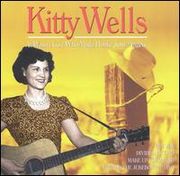
Closing out tonight's show is Miss Kitty Wells doing the song Maria Muldaur liked to sing at age 5. "It Wasn't God Who Made Honky Tonk Angels" was an "answer song," in response to Hank Thompson's "The Wild Side of Life," Here's the 1952 hit that made Kitty Wells a star.
Time for a change of pace again and time to answer some of the emails that have been coming into Dreamtime. First up is a letter from two brothers, Johnny and Jack Richard from Birmingham, Alabama, one of my favorite towns. They write,
Dear Dreamtime, We love your show and we're glad it's a podcast so we can listen to it during the day, since our Mom won't let us stay up late. But we have a question: how come you call it Dreamtime, and how come you never play any John Lennon, our Mom wants to know?
Well, that's two questions, J&J, but I'll let it go this time. I call it "Dreamtime" because Mr. Dylan calls his show, "Theme Time," and I like the rhyme. Plus, his tag-line is "Themes, Dreams and Schemes." But "Scheme Time" didn't make any sense.
Tell your Mom I'll play some Lennon and/or Beatles music when "Theme Time" does. But while we're waiting, here's a song you all will enjoy, played by your namesakes, the singing brother act, Johnnie & Jack, who weren't brothers at all, but brothers-in-law.
[Uncle John's Bongos]
That was Johnnie & Jack and their song from way back in 19 and 61, "Uncle John's Bongos." Johnnie's wife was a lady named Muriel Deason who, if you're a fan of country music, you'll know better as Kitty Wells. Johnnie & Jack made the Billboard country charts a total of 15 times - with and without Kitty.
In 19 and 63, Jack would die in a car crash - ironically while he was on his way to a memorial service for Patsy Cline, herself killed in a plane crash - ending the team of Johnnie & Jack.
Here's an email from Roberta Warren of Washington, D.C….
Dear Dreamtime,
So, how was the Dylan concert at the Manchester ballpark that you said you were going to way back in Episode 2?
Well, Roberta, I gotta tell you, I'm sorry to say I discovered I wasn't the True Fan I make myself out to be. That day was the coldest day of the Summer this year, and it was either drizzling or raining hard all day.
And you know what? They don't allow umbrellas in ball parks. Guess they're scared you might poke out someone's eye, I guess. Now, I love Bob Dylan, but I'm smart enough to come in out of the rain, especially when I don't have an umbrella.
Sorry, Bob.
Here's someone I'd go listen to rain or shine, in the Summer Days or the Summer nights… Big Joe Turner with "Roll `Em, Pete."
[Roll `Em Pete]
Big Joe's gal got eyes like diamonds, they shine like Klondike gold. And all he wants is a little loving from her, cause he knows she's going to die someday. Just wants a little loving, he does, before she passes away.
More email here from Brenda Starr, down the road in Cambridge, MA. Brenda writes,
Dear Dreamtime,
I love your shows, especially the one about Tiny Tim, but how come you're doing them? Forgive me, but you don't sound like a natural radio talent.
Well, thanks, Brenda. I'm doing Dreamtime for lots of reasons, but mostly because I love radio, and always wanted to be on it. But today's radio ain't radio… programmed-ized, homogenized, stupefied. I want the radio back that I grew up with as a kid, with DJ's like Wolfman Jack - before he got popular - and Dusty Roads, and Outrageous Nevada, Stephen Seagull, and the Night Bird. I want DJ's who played whatever they felt like… like Bob Dylan does.
Here's someone you're not likely to hear on any commercial radio soon, Eddie James House, Jr., better known as Son House, with "Low Down Dirty Dog Blues." from 19 and 42.
[Low Down Dirty Dog Blues]
You know, I think Son House liked songs with "Dog" in the title. Some of the other ones he recorded included, "Sic 'Em Dogs On," "Weary Dog Blues," "Baby Please Don't Dog Me 'Round," and "Police Dog Blues." Dylan could have done the whole "Dogs" show just using Son House tunes!
Well, I'm tired of being insulted in emails, so I think I'll play something to cheer myself up before I read another one. Here's one of my favorites, Billie Holiday, also known as Lady Day, who's having herself a time.
[Having Myself A Time]
"Having Myself A Time," was written by the team of Ralph Rainger and Leo Robin. Some of their other hits included "La Bomba," "Blue Hawaii," "Easy Living," which was another hit for Billie Holiday, and the Bob Hope theme song, "Thanks for the Memory."
Okay, I'm feeling better now, so let's go back to the emails. Here's one from someone whose name I can't read… looks like the ink got smeared. They write…
Dear Dreamtime,
Why do you think Dylan plays mostly old music on "Theme Time"? Don't you think he likes Modern Times?
Hmmm. Is that some sort of joke?
I like old songs too, and here's a classic from the '30s and the golden age of dance bands. If it's not too much to ask, think of a moonlight lake, a dance hall, and the girl of your dreams floating in your arms and snuggled on your shoulder
[Snuggled On Your Shoulder]
If "Snuggled on Your Shoulder" sounds like it could be from a Woody Allen movie, you're right. Allen used the composer's - Carmen Lombardo - music in several movies, including "Annie Hall," and "Radio Days." Carmen's more famous brother was Guy, who, if you're as old as me and Dylan, you probably listened to on New Year's Eve, before it got rockin'.
Well, the big clock on the wall says there's no more time for any more emails, but keep those electronic cards and letters coming, please. dreamtimepodcast@gmail.com.
We're closing out with another oldie, "Lonesome Road," by the voice of the Southland, Gene Austin.
[Lonesome Road]
This has been Fred Bals with the Dreamtime podcast - occasional commentary on Bob Dylan's Theme Time Radio Hour weekly show… and occasionally commentary on something else. Dreamtime is not associated with XM Radio or Bob Dylan, but sometimes sees other associations. Until next week, dream on, my brothers and sisters.