
 I've been reading Douglas Brinkley's interview of Bob Dylan in the latest issue of Rolling Stone, which I hadn't thought much of until Sean over at RightWingBob linked to "out-takes" from the interview that hadn't made it to publication.
Rolling Stone has since removed that additional material, unfortunate, as they helped to clarify what seems to me a very disjointed and superficial interview with Dylan. As just one example, Dylan's remark to Nicolas Sarkozy about "the whole global thing" being over, which reads in the print version as either an off-the-cuff joke or a Dylanesque non sequiter, was actually part of a larger conversation about globalization, which Dylan apparently takes very seriously (he's agi'n it).
In any case, I commend Sean's posts at the link above to your attention, as well as the clip he posted on YouTube of Brinkley being interviewed about the interview. If you sometimes weary of Bob Dylan's complaints that he's held to a different standard than the Average Bear, you might reflect on how many people there are in the world whose interviewer would command their own interview, simply on the strength of having interviewed you.
Brinkley mentions in that clip that Dylan likes pilgrimages and, in fact, encourages his fans to check out his old stomping grounds in Hibbing and Dinkytown. Brinkley's article touches on the various pilgrimages Dylan has taken himself, the famous one to see Carl Sandburg in `64, his recent trip to Neil Young's boyhood home ("I wanted to walk the steps that Neil walked every day"), and the less well-known pilgrimages to the homes or graves of Buddy Holly, Jack Kerouac, and Elvis.
Back in the late `80s, Dylan made a pilgrimage to the farm James Dean grew up on. I did a podcast about that trip way back when I was just starting Dreamtime. It was a story I felt a deep connection with because I had had made my own James Dean pilgrimage about a decade earlier. Here's I Ran at Bakersfield, a 9 1/2 minute audio dream, first broadcast on Dreamtime in September 2006, 51 years after the death of James Dean. It remains one of my favorite episodes.
***
[Intro]
Direct link to mp3
[James Dean - Drive Safely]
Episode 15 – I ran at Bakersfield
This is the Dreamtime podcast - occasional commentary on Bob Dylan's Theme Time Radio Hour weekly show.
Sometimes you write the show, and sometimes the show decides to write you. This is one of those shows. This Saturday is September 30th, 2006. Fifty-one years ago, on September 30th, 1955, James Dean died.
I didn't remember that until a few days ago. The date – and the accident – used to be a lot more important to me some 30-odd years back. In the early '70s, I spent the good part of one Fall season driving back and forth between Northern and Southern California, down the Grapevine on Route 5 from Los Angeles, through the San Joaquin Valley and back to the college I was in the long, slow process of leaving.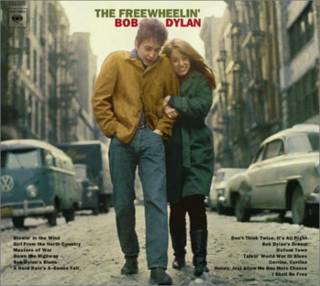 There was a girl in Los Angeles. There's always a girl somewhere in every story. She was in the long, slow process of leaving me too, but I didn't know that then. So every Thursday I would take the Volkswagen, loaded with whatever passengers I could find who were willing to pony up $10 bucks for a roundtrip to LA and back and leave around 11 or so at night to go stay with my girl over the weekend. On Sundays, I'd make the reverse trip… 350 miles back.
On one trip back – by myself that time – I detoured off 5 after passing Bakersfield and headed west on Highway 46, pulling off at the intersection of 46 and 41. It was a little before six pm on September 30th, 19 and 71.
Sixteen years earlier, Dean's Porsche Spyder flew over the road I had just traveled, bearing down like a freight train on the downgrade to a bump-in-the-road town called Cholame. At the intersection of Highways 46 and 41, Dean would collide with a Ford Tudor, driven by a 23-year-old with the unlikely last name of Turnupseed. It was 5:45 in the early evening. The sun was just setting.
Turnupseed would survive the accident and live for another 40 years. He would never speak publicly about what had happened. Dean's one passenger also survived. Dean lived for a few moments after the crash, but was pronounced Dead On Arrival at Paso Robles Hospital.
Rebel without a Cause would premiere about a month later.
We all make pilgrimages. In 1988, Dylan, with an entourage of 15 in tow, visited the farm that Dean grew up on, in Fairmount, Indiana. "It was 1 or 2 o'clock in the morning,” said Marcus Winslow, one of Dean’s cousins. “He'd had a concert in Indianapolis, and he came with a bus to Fairmount. He came out here for a few minutes. ..."
That was probably the morning of July 16th, 19 and 88, the morning after Dylan finished a show at the Indiana State Fairgrounds during what would become the first year of the Never Ending Tour. As an aside, Dylan mentions in the liner notes of World Gone Wrong that the Never Ending Tour actually ended three years later in 1991, to be followed by a succession of others, including The Money Never Runs Out, The Southern Sympathizer and the Why Do You Look at Me So Strangely tours.
No word on what the current one is called, although I’m holding out hope that its name is The Search for Rejection tour in honor of Modern Times.
In 1955, Bob Dylan was 14 years old. Like hundreds of other teenagers he would see Rebel multiple times, and bought Rebel's iconic red jacket… just like James Dean’s.
During the 1963 cover shoot for The Freewheelin' Bob Dylan, Dylan reportedly wanted to create Roy Schatt's 1954 photo of James Dean walking down West 68th in New York City. The Freewheelin' photo that would eventually be the cover uses Jones Street in Greenwich Village, a one-block street connecting West 4th and Bleeker, as its backdrop.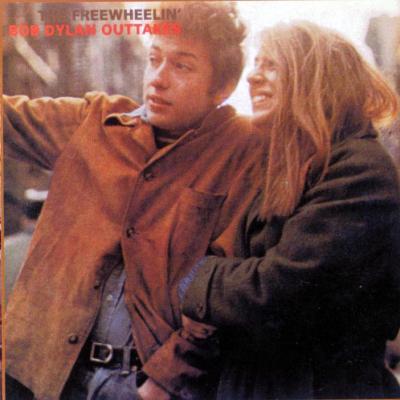 At least one other Don Hunstein photo from the same session has surfaced. Used as the cover art on The Freewheelin' Bob Dylan Outtakes bootleg, the picture also features Dylan's girlfriend at the time, Suze Rotolo, braced on his arm as he strikes an even more Dean-like pose.
We all emulate our heroes.
On the 50th anniversary of Dean's death, the state of California put up a sign at the intersection, naming it the James Dean Memorial Junction. If you travel about a quarter of a mile west, you'll find a memorial put up in 1977 by a Japanese Dean fan. It's engraved with Dean's name, date of birth and death, an infinity symbol, and what was reportedly Dean's favorite quote, "What is essential is invisible to the eye," from The Little Prince.
Back in the early `70s, none of that was there to see at the junctions of 41 and 46, just a lonely, dusty patch of California road. I sat on the hood of my car for awhile, watching the sun go down. And I got back in the VW, pulled onto the road, blinded then by the explosion of the sunset's glare, not able to see a thing.
And a car came out of the sunset light, engine screaming, horn blaring, swerving inches from my left bumper, and then gone.
I think it was a silver Porsche. It looked like a Porsche. But except for a lone, dark patch of rubber from its braking, there was nothing left to see.
I had stalled the VW in my fright. I started it up again and drove on. In a year I'd be in the Army, and on the road that would eventually lead me here, in my kitchen in New Hampshire, looking out the window at golden Fall light, writing this, in the year of our Lord, 2006.
[Rebel without a Cause theme]
This has been Fred Bals with the Dreamtime podcast, occasional commentary on Bob Dylan's Theme Time Radio Hour weekly show and occasionally commentary on other dreams. I'll be at Podcast Expo in Ontario, California on September 30th. If you're in the neighborhood, come by and say hello.
I'll be the guy wearing the red jacket... just like James Dean.
The opening Gig Young interview with James Dean on automobile safety and the closing Rebel theme were both taken from the beautifully produced Rebel without a Cause 2-disc DVD set. If you haven't seen Rebel - or haven't seen it in awhile, go watch it. The background music - provided tonight from the PodShow Podsafe Music Network. Check it out at 'music.podshow.com. The artist is nezecus.
Wednesday, May 06, 2009
Pilgrimages

Friday, December 29, 2006
Episode 24: 1953 and Changes in the Wind
 [Intro]
Direct link to mp3.
Subscribe to Dreamtime
Episode 24 - 1953 and Changes in the Wind

Dreamtime closes out 2006 with a turn around the radio dial and a look back at a year when music was about to change forever... 1953.
Harry S. Truman hands over the reins of power to Eisenhower. Peter Pan and the first 3D movie, Bwana Devil, premieres. Ian Fleming publishes the first James Bond novel, Casino Royale. Both the U.S. and Soviet Union announce the development of a hydrogen bomb.
The Korean War ends and the Kinsey Report issues Sexual Behavior in the Human Female. Pat Benatar, Desi Arnaz, Jr., Cyndi Lauper, Alan Moore, and Kim Basinger are all born in 1953.
On January 1, 1953, Hank Williams hired a chauffeur to drive him to his next gig in Canton, Ohio from Knoxville, Tennessee. Williams left in a Cadillac, carrying a bottle of whiskey with him. When his driver pulled over at an all-night service station in Oak Hill, West Virginia, he discovered Williams dead in the back seat. Hank Williams was 29.
Williams' single, the eerily-titled I'll Never Get Out of This World Alive would hit #1 on the Billboard Country Charts on January 24, 1953, and is our first stop in our spin around the 1953 airwaves.
 As Dylan says in the Dogs episode of Theme Time, Patti Page's (How Much Is) That Doggie in the Window? - which she recorded on a Thursday, the week before Christmas, a date which also happens to be the date of my birth, December 18, 1952 - would hit the top of the single charts on January 10th, 1953, and remain there until finally booted off by Percy Faith and his Orchestra's Song From Moulin Rouge, also known as Where is Your Heart?
In turn that single would lose the #1 slot to I'm Walking Behind You, sung by Eddie Fisher. Turn on your Dreamtime radio and listen in as we broadcast a collage of popular music from January through June of 1953, including all three, as well as Perry Como's Don't Let the Stars Get in Your Eyes, the first #1 pop single of 1953.
But change, as the man says, was in the wind.
Crazy Man, Crazy, recorded by Bill Haley & His Comets in April 1953, would be the first rock and roll single to make it on the American musical charts, where it peaked at #12. Crazy Man, Crazy may also have been the first rock and roll recording to be played on national television in the U.S. when it was used in the soundtrack of Glory in the Flower, an episode of the CBS anthology series, Omnibus. Interestingly. Glory in the Flower starred James Dean, soon to become iconic in Rebel Without a Cause.
On August 1, 1953, The Orioles' biggest hit, Crying in the Chapel, enters the R&B charts, and will go on to top the charts for the next eight weeks. A decade later, Elvis Presley would cover Crying in the Chapel for his gospel album How Great Thou Art. And Elvis, as Dylan says, would begin his Sun recording career in the summer of 1953, most likely prompted by an article in the local paper on Sam Phillips's recording of the Prisonaires, a group of prisoners from the state penitentiary, as faithful Theme Time listeners already know.
Elvis walked into into 706 Union Avenue and asked to record for the very first time. The two songs he cut were My Happiness, originally written in 1933 by Betty Peterson and Borney Bergantine and That's When Your Heartaches Begin, written in 1940 by William J. Raskin, Billy Hill and Fred Fisher. Elvis later re-recorded that one for RCA as the B side to the single All Shook Up and it peaked at #58 on the Hot 100 Chart...
...and meantime, back in 1953 the doggie was growing up to be a hound dog. We wind up our Dreamtime radio tour with Big Mama Thornton's original 1953 version of Hound Dog, written Jerry Leiber and Mike Stoller. Big Mama Thornton is backed on this cut by by Theme Time favorite Johnny Otis, who also got author credit on the original pressings.
You've been listening to the Dreamtime podcast – occasional commentary on Bob Dylan's Theme Time Radio Hour.
Dreamtime is researched and written by Fred Bals, and is a Not Associated With production.
Some of the music on Dreamtime is provided via the Podsafe Music Network. Check it out at music.podshow.dot com. Our closing theme is performed by Lounge Affaire, courtesy of Christopher Murphy Studio.
We love your email and you can write us at dreamtimepodcast@gmail.com
The Dreamtime top cats are Curly Lasagna and Shaggy Bear. Our announcer is the lovely Jailbait Jones.
Until next time, dream well.
Thursday, September 28, 2006
Episode 15 – I Ran at Bakersfield
[Intro]
Direct link to mp3
Subscribe to Dreamtime
[James Dean - Drive Safely]
Episode 15 – I ran at Bakersfield
This is the Dreamtime podcast - occasional commentary on Bob Dylan's Theme Time Radio Hour weekly show.
Sometimes you write the show, and sometimes the show decides to write you. This is one of those shows. This Saturday is September 30th, 2006. Fifty-one years ago, on September 30th, 1955, James Dean died.
I didn't remember that until a few days ago. The date – and the accident – used to be a lot more important to me some 30-odd years back. In the early '70s, I spent the good part of one Fall season driving back and forth between Northern and Southern California, down the Grapevine on Route 5 from Los Angeles, through the San Joaquin Valley and back to the college I was in the long, slow process of leaving.
There was a girl in Los Angeles. There's always a girl somewhere in every story. She was in the long, slow process of leaving me too, but I didn't know that then. So every Thursday I would take the Volkswagen, loaded with whatever passengers I could find who were willing to pony up $10 bucks for a roundtrip to LA and back and leave around 11 or so at night to go stay with my girl over the weekend. On Sundays, I'd make the reverse trip… 350 miles back.
On one trip back – by myself that time – I detoured off 5 after passing Bakersfield and headed west on Highway 46, pulling off at the intersection of 46 and 41. It was a little before six pm on September 30th, 19 and 71.
Sixteen years earlier, Dean's Porsche Spyder flew over the road I had just traveled, bearing down like a freight train on the downgrade to a bump-in-the-road town called Cholame. At the intersection of Highways 46 and 41, Dean would collide with a Ford Tudor, driven by a 23-year-old with the unlikely last name of Turnupseed. It was 5:45 in the early evening. The sun was just setting.
Turnupseed would survive the accident and live for another 40 years. He would never speak publicly about what had happened. Dean's one passenger also survived. Dean lived for a few moments after the crash, but was pronounced Dead On Arrival at Paso Robles Hospital.
Rebel without a Cause would premiere about a month later.
We all make pilgrimages. In 1988, Dylan, with an entourage of 15 in tow, visited the farm that Dean grew up on, in Fairmount, Indiana. "It was 1 or 2 o'clock in the morning,” said Marcus Winslow, one of Dean’s cousins. “He'd had a concert in Indianapolis, and he came with a bus to Fairmount. He came out here for a few minutes. ..."
That was probably the morning of July 16th, 19 and 88, the morning after Dylan finished a show at the Indiana State Fairgrounds during what would become the first year of the Never Ending Tour. As an aside, Dylan mentions in the liner notes of World Gone Wrong that the Never Ending Tour actually ended three years later in 1991, to be followed by a succession of others, including The Money Never Runs Out, The Southern Sympathizer and the Why Do You Look at Me So Strangely tours.
No word on what the current one is called, although I’m holding out hope that its name is The Search for Rejection tour in honor of Modern Times.
In 1955, Bob Dylan was 14 years old. Like hundreds of other teenagers he would see Rebel multiple times, and bought Rebel's iconic red jacket… just like James Dean’s.
During the 1963 cover shoot for The Freewheelin' Bob Dylan, Dylan reportedly wanted to create Roy Schatt's 1954 photo of James Dean walking down West 68th in New York City. The Freewheelin' photo that would eventually be the cover uses Jones Street in Greenwich Village, a one-block street connecting West 4th and Bleeker, as its backdrop.
At least one other Don Hunstein photo from the same session has surfaced. Used as the cover art on The Freewheelin' Bob Dylan Outtakes bootleg, the picture also features Dylan's girlfriend at the time, Suze Rotolo, braced on his arm as he strikes an even more Dean-like pose.
We all emulate our heroes.
On the 50th anniversary of Dean's death, the state of California put up a sign at the intersection, naming it the James Dean Memorial Junction. If you travel about a quarter of a mile west, you'll find a memorial put up in 1977 by a Japanese Dean fan. It's engraved with Dean's name, date of birth and death, an infinity symbol, and what was reportedly Dean's favorite quote, "What is essential is invisible to the eye," from The Little Prince.
Back in the early `70s, none of that was there to see at the junctions of 41 and 46, just a lonely, dusty patch of California road. I sat on the hood of my car for awhile, watching the sun go down. And I got back in the VW, pulled onto the road, blinded then by the explosion of the sunset's glare, not able to see a thing.
And a car came out of the sunset light, engine screaming, horn blaring, swerving inches from my left bumper, and then gone.
I think it was a silver Porsche. It looked like a Porsche. But except for a lone, dark patch of rubber from its braking, there was nothing left to see.
I had stalled the VW in my fright. I started it up again and drove on. In a year I'd be in the Army, and on the road that would eventually lead me here, in my kitchen in New Hampshire, looking out the window at golden Fall light, writing this, in the year of our Lord, 2006.
[Rebel without a Cause theme]
This has been Fred Bals with the Dreamtime podcast, occasional commentary on Bob Dylan's Theme Time Radio Hour weekly show and occasionally commentary on other dreams. I'll be at Podcast Expo in Ontario, California on September 30th. If you're in the neighborhood, come by and say hello.
I'll be the guy wearing the red jacket... just like James Dean.
The opening Gig Young interview with James Dean on automobile safety and the closing Rebel theme were both taken from the beautifully produced Rebel without a Cause 2-disc DVD set. If you haven't seen Rebel - or haven't seen it in awhile, go watch it. The background music - provided tonight from the PodShow Podsafe Music Network. Check it out at 'music.podshow.com. The artist is nezecus.
Visit the Dreamtime Store
Thursday, September 14, 2006
Episode 13 - Stay away from planes and automobiles
[Intro]
Episode 13 - Stay away from planes and automobiles
Direct link to mp3
Subscribe to Dreamtime
[Dylan Email reading - from "Devil"]
"…I don't know what they're teaching in school nowadays, but here's a list for ya: Two princesses - Princess Grace of Monaco and Britain's Princess Diana; the famous 20th century dance innovator Isadora Duncan; Albert Camus, the author of "The Stranger;" James Dean, who died in his Porsche Spyder; action-painter Jackson Pollock; beautiful blonde actress Jayne Mansfield; and old blood'n'guts himself, General George Patton, Jr., all died in car accidents.
So be careful when you get behind the wheel. You never know when the checkered flag comes down and you find yourself in a race with the Devil."
[Dead Man's Curve excerpt]
Notably missing from Dylan's list in the "Theme Time" episode, "Devil," are any musicians. But, if you're a regular listener to "Theme Time," you'll know that Dylan has provided an ongoing roll call of musicians who have died in plane and automobile crashes since the first show, "Weather," and his introduction of "The Spaniels" version of "Stormy Weather."
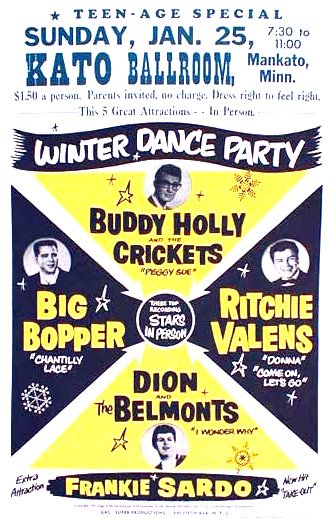 The Spaniels were on the Winter Dance Party Tour with Buddy Holly, Ritchie Valens and the Big Bopper in February of 1959, the day the music supposedly died, as Dylan relates with noticeable disgust in his voice, because the music can't die, of course. It's probably one of the few things in the world that's definitely indestructible, unkillable, invincible. But musicians are only human, and Buddy Holly, Ritchie Valens and the Big Bopper all did die that day in the infamous plane crash.
It's not easy being a DJ, Dylan mentions in the recent "Radio" episode, and it's not easy being a professional musician either. Bad food, a bad lifestyle where bottles, pills and needles are all too available. And there's too much travel, and nights staring out at a sea of faces that you can barely see through the lights. And the next day is the next town, and you have to get there somehow.
You wonder whether Dylan thinks about that on the Never-ending Tour, looking out the window as the bus takes him to another town.
Patsy Cline was another star claimed in a plane crash, on March 5th, 19 and 63, along with her manager, Randy Hughes, who was flying the yellow Piper Comanche, and Cline's fellow musicians, Cowboy Copas and Hawkshaw Hawkins. Dylan played Hawkin's Dog House Boogie on the 16th episode of "Theme Time." and Cowboy Copas' "Three Strikes and You're Out" on "Baseball."
As I mentioned in my last episode, Jack Anglin, of Johnnie & Jack, also died in 1963, driving alone to attend a memorial service for Patsy Cline not far from his home. Jack rounded a bend at high speed, crashed and was killed at age 46. Dylan hasn't played Johnnie & Jack yet on "Theme Time," but I bet he will.
Another artist who I'm betting will make a "Theme Time" appearance is Rick Nelson, who Dylan has high praise for in "Chronicles." Born Eric Hilliard Nelson in 1940, Rickie Nelson had the million-selling hit, "Travelin' Man" in 19 and 61. Shortly after the single topped the US charts, Nelson celebrated his 21st birthday and announced that he was changing his performing name from Ricky to Rick.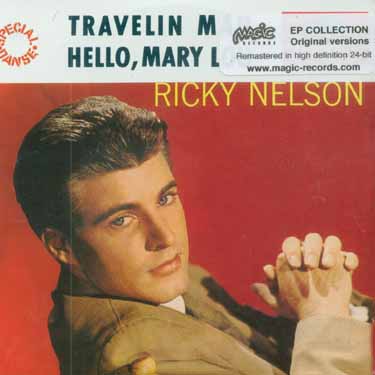
Ten years later, Nelson composed "Garden Party," an open letter to fans that he was determined not to become a living museum of `60s replays, like it or not. Ironically, "Garden Party" also became a million-seller and was Nelson's last hit record. On the 31st of December 19 and 85, a chartered plane carrying him to a concert date in Dallas crashed near De Kalb, Texas.
[Travelin' Man excerpt]
Planes are dangerous enough for musicians, as are helicopters, as Bill Graham among others would tell you, but for sheer body count, four-wheeled vehicles are the musician's major nemesis.
Eddie Cochran - Dylan played his "Summertime Blues" - was killed in England when his taxi suffered a burst tire and veered off the road and crashed. Gene Vincent was a badly injured passenger.
Keith Godchaux of the Grateful Dead - Dylan played their "Friend of the Devil," in the "Devil" show, although Pig Pen was still their keyboardist back then - was leaving a toll plaza and drove straight into the back of a flatbed truck, killing him instantly.
Speaking of the "Devil" episode, and as I mentioned in my own take on the Louvins, Ira Louvin died at age 40 in a head-on collision with a drunk driver as he drove home from a performance. Of course country music has a rich history of songs about car crashes, such as Porter Wagoner's "Carroll County Accident," which I think pretty much fits Dylan's recent exposition on what country music is all about.
[Carroll County Accident]
Tommy Perkins, the drummer for Bob Wills and his Texas Playboys died in 2003 driving home from a festival celebrating the "King of Western Swing."
J.B. Lenoir from the "Mother" episode of "Theme Time" died in 19 and 67 from a heart attack following a car crash.
Bessie Smith - lost at age 43 when her car was struck head-on by a truck. She survived the accident, but legend has it that she was denied treatment from several "whites only" hospitals in Mississippi before arriving at a "colored's only" hospital in Clarksdale. But by then it was too late for Bessie.
And I could go on but I think that's enough. It's a jungle out there, as Randy Newman sings, and many of the beasts have steel skins. So take care of yourself, and if you think of it, say a prayer for all the musicians on the road.
This has been Fred Bals with the Dreamtime podcast - occasional commentary on Bob Dylan's Theme Time Radio Hour weekly show. Dreamtime is not associated with XM Radio or Bob Dylan, and is obviously not associated with either the airline or automobile industries. Until next time, stay safe, and sweet dreams.
Links to music excerpted on the show:
Jan & Dean - Dead Man's Curve (Amazon link)
Rick Nelson - Travelin' Man

Porter Wagoner - The Carroll County Accident
The Nitty Gritty Dirt Band - Will the Circle Be Unbroken - Wreck On the Highway
Visit the Dreamtime Store for music from "Mothers"

